


How to get ahead in the industry (according to the professionals)
Picture a career in publishing, and you might imagine a nine-to-five editor with their nose buried in a manuscript. But this cosy image couldn’t be further from the truth because, in reality, publishing is a dynamic and multi-layered industry with many roles. BSU Publishing students attended the Writers’ and Artists’ conference on ‘Careers in Publishing’ at Bristol Library (in partnership with Bloomsbury Institute) to find out more.
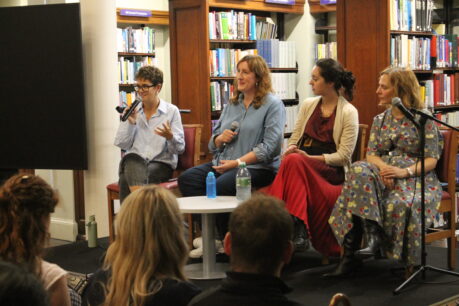
The panel included three industry professionals – Juliet Pickering (Literary Agent), Alice Bidetti (Senior Consultant at Inspired Selection), and Jess Mitwright (Head of Production at Bristol University Press).
Some of the careers they highlighted were in the areas of Acquisitions, Editorial, Design and Production, and Sales and Marketing, speaking about a wide range of roles that require both transferable skills and more tailored experience.
When asked what they loved about their job, Juliet shared her appreciation of her role as a literary agent, because of the variety it offers. One of her favourite things is negotiating contracts on behalf of an author because she finds joy in advocating for their interests. Meanwhile, Alice praised the resilience of the industry – how backlist titles are being rediscovered and how authors are coming up with new ways to tell stories.
What experience do you need to get into the publishing industry?
The three speakers agreed that in order to gain the relevant experience for a role, it depends on the job you want. However, there are always transferable skills that can be used. Juliet highlighted that companies are looking for experience in:
- Organisational work
- Customer service
- Communication
She explained that having the skills to communicate effectively is just as important as having a degree. Alice and Jess added some more skills of note, including:
- Experience with Microsoft Excel spreadsheets
- Experience making pivot charts
- Time management
- Project management
Emphasis was also placed on the importance of making sure your CV and cover letter have no spelling mistakes as this suggests a lack of attention to detail. When applying for jobs, you should also check how your skills fit the role and what the company is asking for.
Interview etiquette
The main piece of advice on this topic was to come prepared with questions about the company and the culture, as this helps you stand out among other candidates. Juliet added that being chatty and personable with the interviewer highlights your ability to work well with others and shows that you care about working there.
Hot tip: Emailing interviewers afterwards to say ‘Thank you so much for the opportunity’ can go a long way in making you a true contender for the job.

Industry insights: The issue of AI
Inevitably, the speakers were asked how they felt about AI in publishing.
Jess shared that while people worry about how AI will impact careers in publishing, the world we’re in uses it, so the important thing is to protect authors while still adapting to new technology. We can’t work against it, but we mustn’t lose our creativity, Juliet advised. Belle, a first-year Publishing student at Bath Spa University, attended the event and noted that the stance seemed to be ‘awareness is key’.
Stay curious, ask questions and keep an open mind. You never know what you might have to offer the world of publishing
More specifically, as Alice pointed out that we must learn to differentiate between useful operational systems that the technology provides and the problematic generative AI models. After all, there are advantages to a digital market, such as job creation, tailored book recommendations, and reader accessibility.
Moving on from AI, the speakers addressed the idea of unpaid internships. While there are plenty of free schemes such as mentorship programs that can help people get jobs and understand the industry better, internships should always be paid.
Finally, when asked how they got into the world of publishing, Juliet explained that she worked at Waterstones, where she then found work experience through a co-worker’s agent. Alice interned in the industry after university, as did Jess, who found a placement through the publishing industry magazine The Bookseller.
In short, if you’re looking to get involved – and get paid for it too – then stay curious, ask questions and keep an open mind. You never know what you might have to offer the world of publishing.
Kickstart the job search
With work experience emphasised as the best place to start, the panel mentioned a few resources to help in the job search:
-
- Book Brunch
- The Publishing Post
- Independent Publishers Guild
- Sending letters / CVs to literary agencies
- LinkedIn – a good resource for contacting HR teams and editors to get an understanding of the industry and build a network (people in the industry enjoy their jobs so love to have their ‘brain picked’ for information)
Key Takeaways
-
- Work experience and internships are good opportunities to learn more about the publishing industry.
- Tailor your CVs to the role and the company you are applying to.
- Communication and organisational skills are essential to many employers.
- Prepare and ask questions in interviews.
- AI should be used correctly and in moderation.
- There are many paid work experience opportunities and you should not be expected to work for free.


